

Ryan Standfest
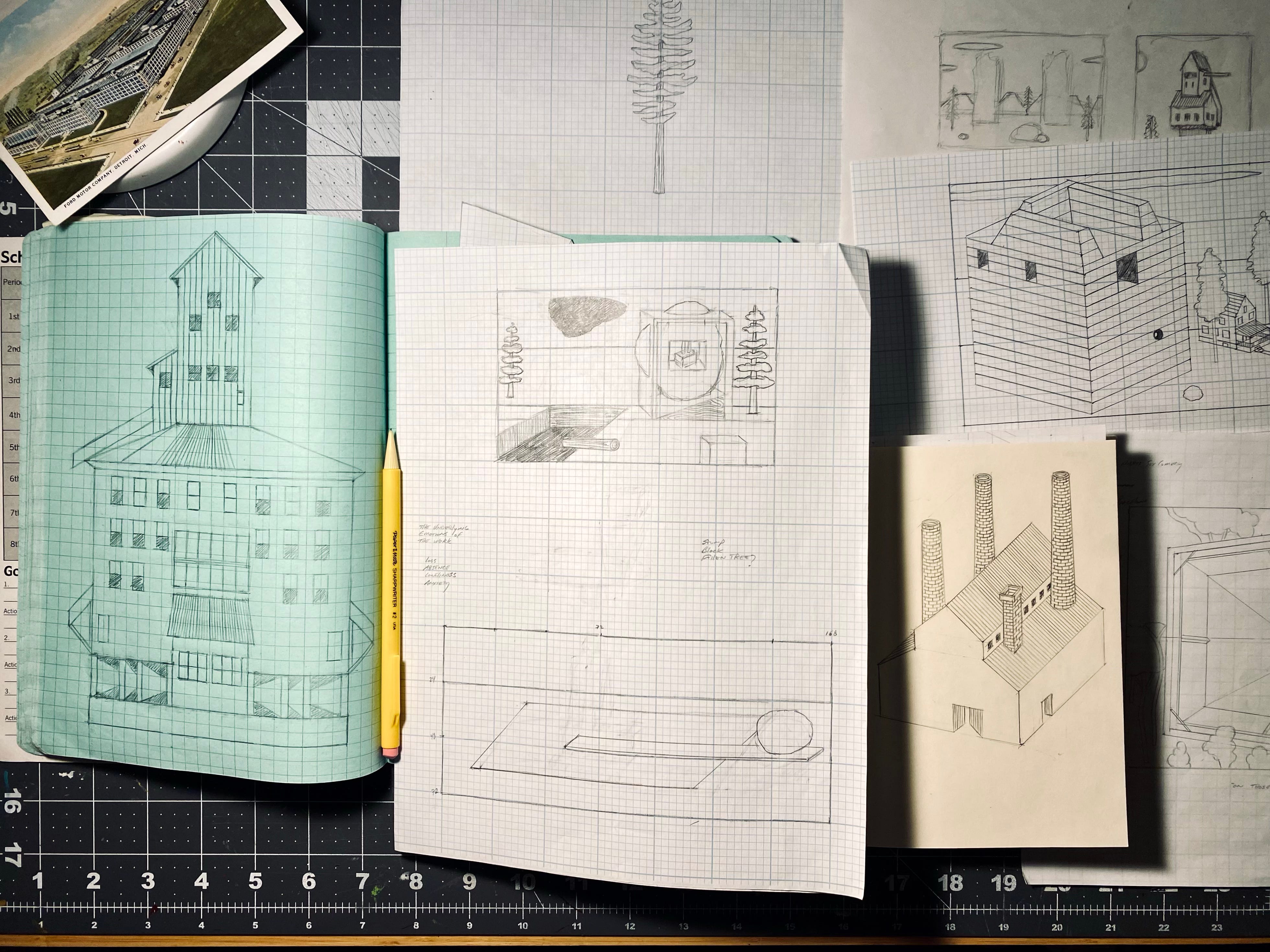
"What I am attempting to do now, is to depict an uneasy, troubled state of existence— environments of loss and loneliness and doubt and oppressive external forces."
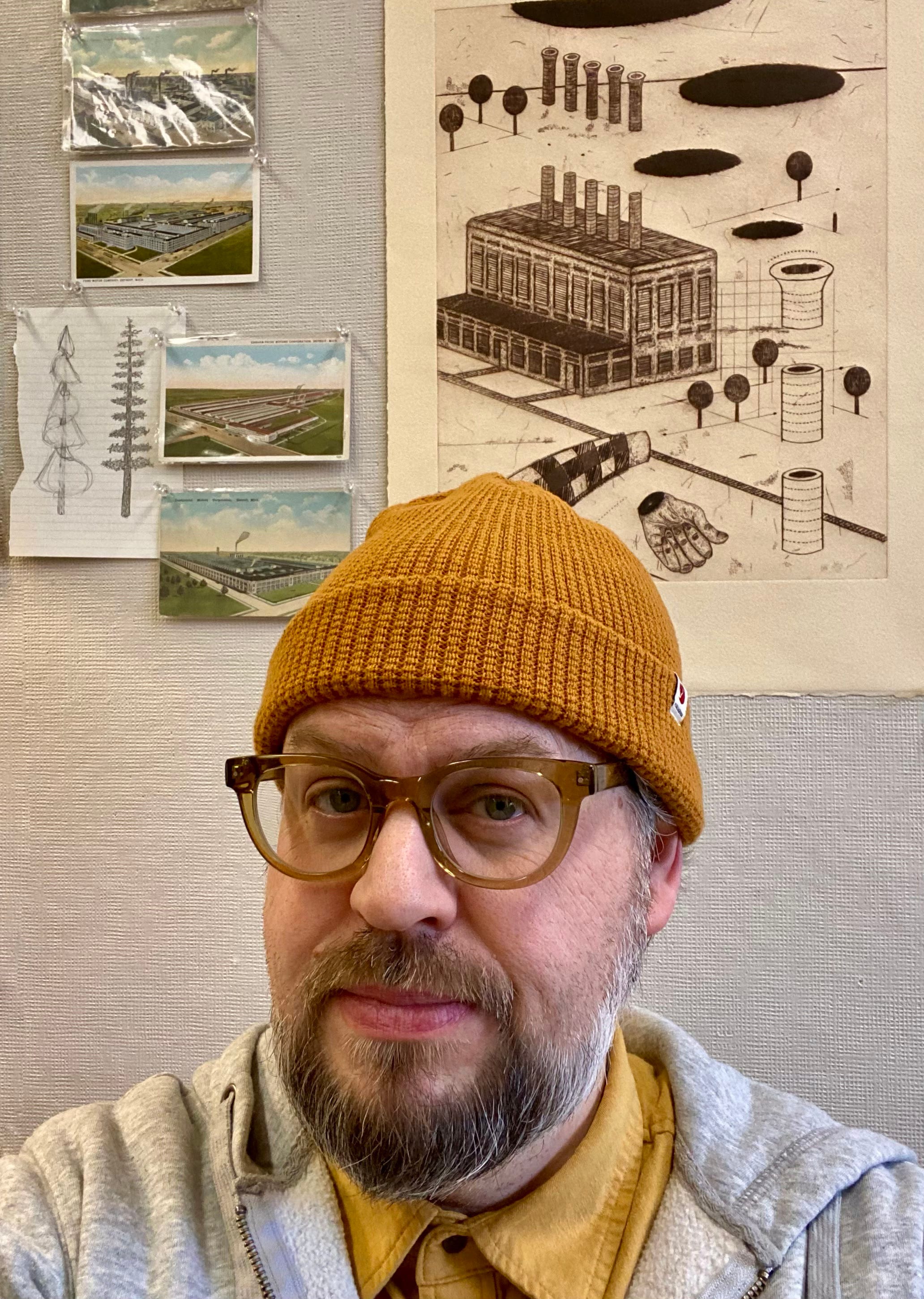
RYAN STANDFEST is an artist in Detroit, Michigan. His work is currently on view in Chicago at Western Exhibitions and Northeastern Illinois University and at the Buckham Gallery in Flint, MI. He has previously exhibited at the Simone DeSousa Gallery (now Matéria, Detroit), which published a monograph on his work in 2020, Wasserman Projects (Detroit), The Detroit Institute of Arts, and the Museum of Contemporary Art Detroit, among others. As an arts writer, he has authored criticism and essays, appearing in numerous journals. Standfest contributed a chapter to the book Radical Dreams: Surrealism, Counterculture, Resistance, edited by Elliott H. King and Abigail Susik (Penn State University Press, 2022). He has been an artist-in-residence at the Jentel Foundation (Banner, WY), the Kimmel-Harding-Nelson Center for the Arts (Nebraska City, NE), the Ragdale Foundation (Lake Forest, IL), and the Virginia Center for the Creative Arts (Amherst, VA). His work has been written about in Art in America, FRIEZE, Hyperallergic, The New York Times, and PRINT. Standfest earned an MFA in Printmaking from the University of Iowa, Iowa City and a BFA in Printmaking and Drawing from Wayne State University, Detroit. He is an Assistant Professor of Art at Oakland University, Rochester, MI.
MEPAINTSME: You’re an artist, teacher, and publisher based in Detroit, and I’m especially curious about the art scene there. What is the city like for a creative professional today?
RYAN STANDFEST: What constitutes a “scene” in Detroit is a bit of a mystery to me, as I happily tend not to be embedded in any particular tribe. I move amongst the crowd, but have not situated myself anywhere. I’ve come to accept my position as an inside-outsider! With great interest, though, I follow cultural production beyond Detroit. I look regularly to Chicago, for instance– a city whose artistic rhythms I have long felt a kinship for.
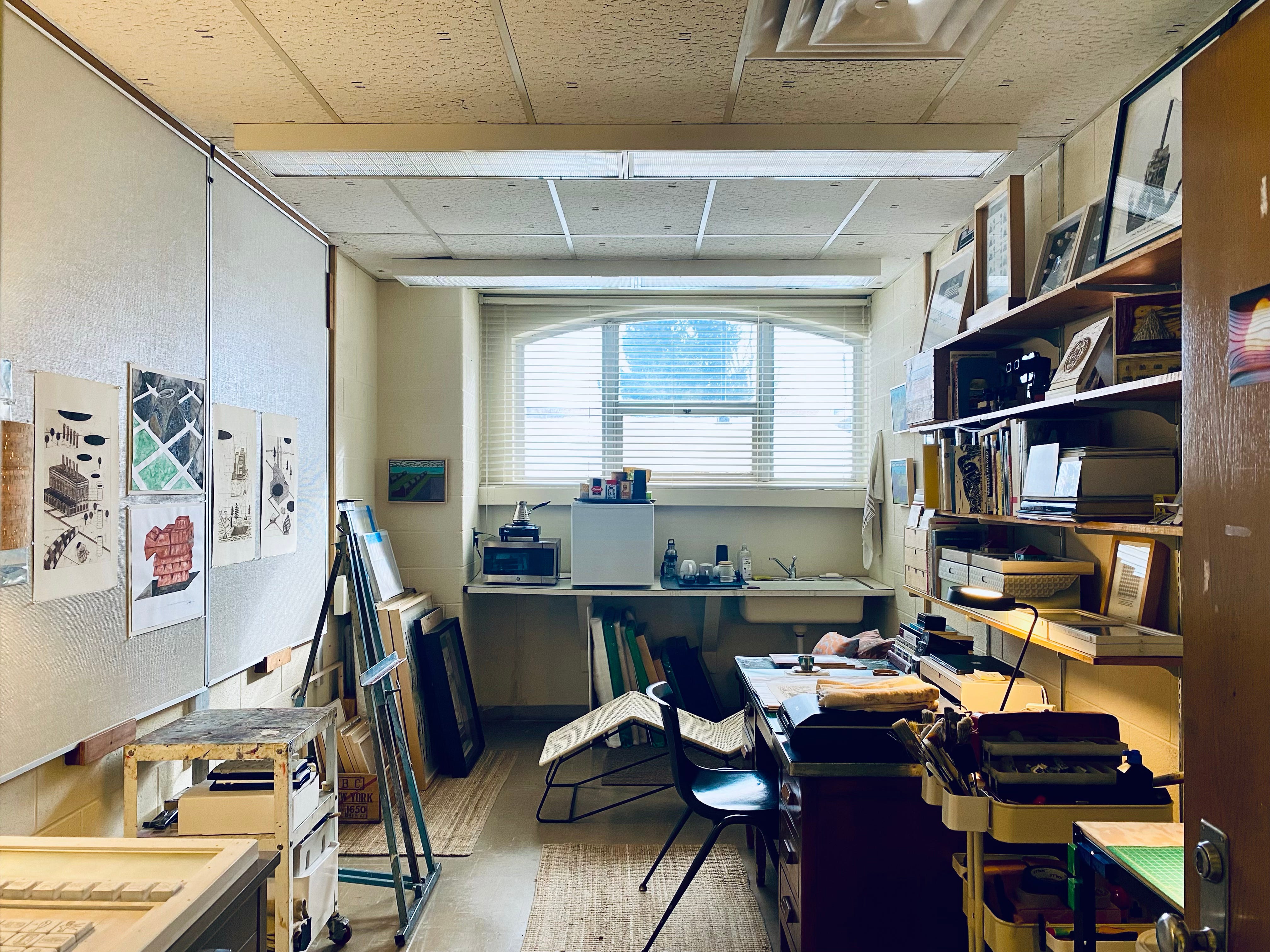
MPM: Staying focused on Detroit for a moment—do you feel that the arts are genuinely supported there? How does the city influence or challenge your work?
RS: I wouldn’t characterize the current gallery situation as thriving. There is a need for more galleries, a wider variety of gallery types, and a more engaged base of collectors. A once-influential group of collectors with an educated eye has aged out, but they have yet to be replaced by a younger, committed generation.
Beyond this, there are more personal ways in which Detroit has shaped my identity, my work, and my motivations for creating. The city holds significant psychological importance for me. My social disconnect from it may be essential to how I perceive it from an outside perspective, even though it is my hometown. Detroit embodies a deep sense of contradiction—it is a place where the modernist dream flourished, only to lead itself into obsolescence. It was a location where Fordism instilled a sense of upward mobility until it no longer did so. It represents a promise that was denied to many.
There is a quote by Henry Miller from his 1946 book, *The Air-Conditioned Nightmare*, that I find particularly resonant: “The capital of the new planet—the one, I mean, which will kill itself off—is of course Detroit. I realized that the moment I arrived.” He is not speaking about the city itself or its people, but rather about the large-scale industrialization that began there, which eventually spread to dominate the rest of the world.
This kind of thinking sticks to my insides and permeates all that I see. I carry Detroit with me wherever I go and tend to seek out the “Detroit effect” in other towns and cities I travel to. My work — my worldview — would not exist without Detroit. Psychically, we are joined, for better and for worse. And I choose to live at the neural center of it all, not because of any opportunities afforded to me by the artistic community, but because the narrative of the city continues to unfold, and my family’s complex relationship to its industrial history requires a sustained deep dive into the space that holds the ordeal.
My home is in a Mies van der Rohe high-rise built in 1963 and located in Lafayette Park — a planned, modernist neighborhood that resulted from a post–WWII urban renewal project guided by the city’s racist development policy of razing an entire vibrant Black community by labeling it a “slum.” Mies and his developer eventually constructed what became the largest collection of his residential projects on this land. These complicated narratives are of value to me. To live here is to continue processing what progress and decline mean.
MPM: Your practice spans roles as an artist, publisher, writer, and educator. How do these different facets of your work inform and influence one another?
RS: They are all one and the same, really. I see no divisions. All are my attempt, as a human, to communicate with other humans. I am still, many decades into this living thing, trying to find my tribe. Trying to broker thoughtful discourse. Trying to make sense of the mess of living day to day by asking questions, coming up with answers, and then asking more questions. It is all one big, self-reflexive pursuit of awareness. And at each step of the way, I can only hope to arrive at a bit more insight than where I last was — to evolve, somehow.
MPM: You’ve spoken about living in New York for a period in your life and feeling disenchanted with the gallery system. What ultimately pushed you away from that environment, and what were you hoping to find elsewhere?
RS: I love visiting New York and still do so frequently. But living there was an entirely different matter. I am an anxious human as it is, and the city was not the right environment for me. It had a tendency to push my anxiety right over the edge. I did not engage with the gallery system while I was in New York. I was an observer, for sure — making a trek to see art every weekend — but I was so focused on day-to-day survival that I had little time to make art or find a place to show it.
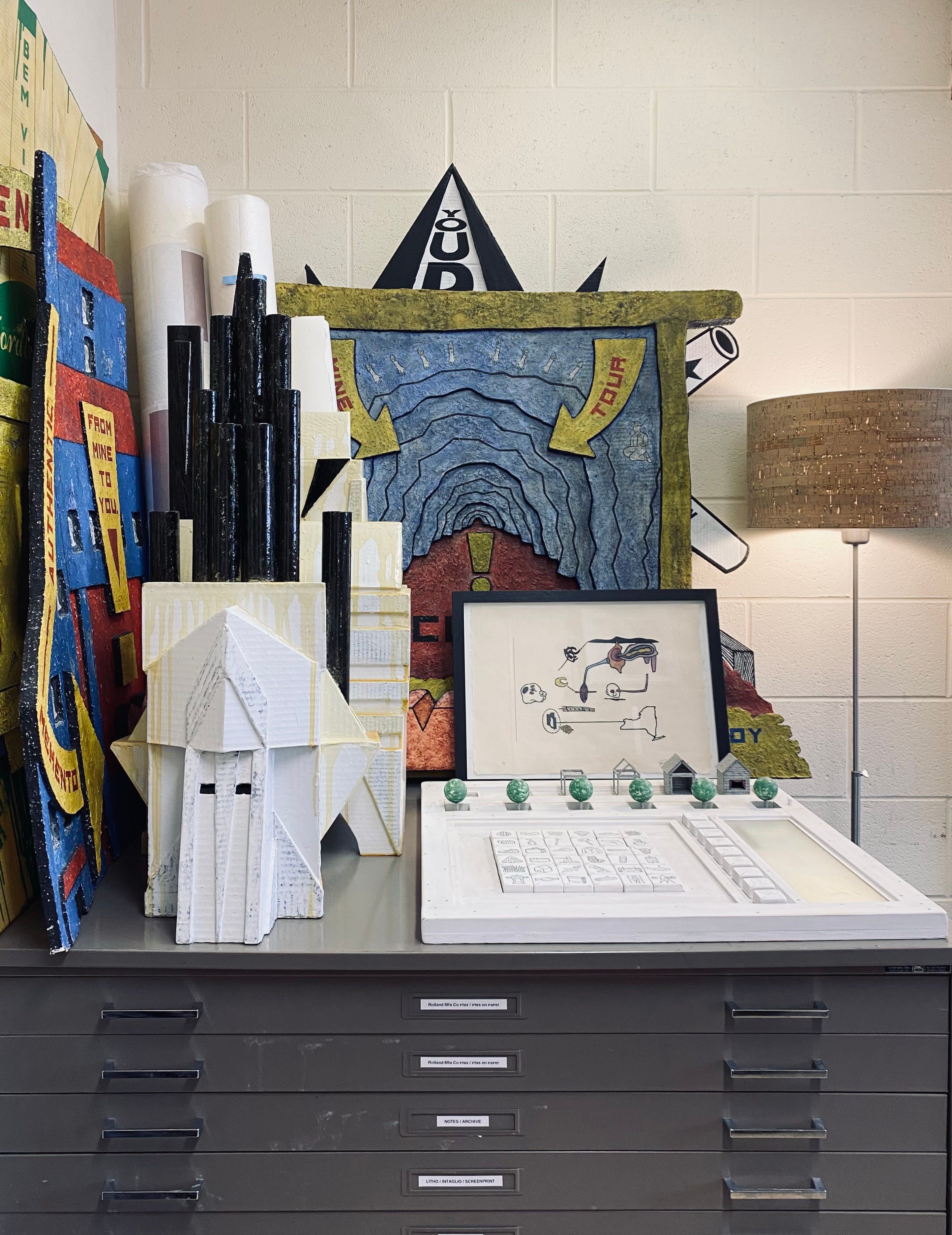
The desperation to keep eating and pay the rent, without being able to sustain a studio life, is what eventually drove me to reluctantly return home to Detroit. What little art I did produce was relegated to a pack of 3 x 5 notecards that I carried around in my “pocket studio” wherever I went, along with a mechanical pencil. I called these drawings Daily Rotland(“Rotland” being a term I devised in graduate school to describe a psychological state — an imaginary place where hope decays or rots, if you will), and they became a receptacle for the minutiae of my daily frustrations.
I would sit in a diner in Bay Ridge or in Washington Square Park and make these little cartoons of soul-crushing forces comically reducing surrogate characters to wreckage. At the time, I was a heavy reader of independent comics, and it shows in these caricature-driven notecard drawings. I ended up making about 150 in total, though I’ve since discarded most of them out of embarrassment.
MPM: Is this what prompted you to found Rotland Press?
RS: In some sense, yes. I was a wreck when I returned home to Detroit after my New York experience. Lost and unsure of myself, I immediately took up Transcendental Meditation and began teaching at Wayne State University. I continued drawing the Daily Rotland cards for a period, then stopped.
Feeling isolated and disenchanted — having taken up residence in my grandmother’s basement — I decided to generate some projects to expand and enrich my world. First, I began an ambitious, hour-long existential horror film titled Way Down Low, starring myself and my grandmother, which attempted to distill the trauma of geographic displacement and psychic homelessness into an abstract narrative. Sets were constructed, props were built, and gross-out special effects were engineered.
After two years of filming, I submitted it to numerous film festivals, to no avail. I don’t think anyone could sit through the whole thing! I eventually edited WDL down into two shorter films, The Dirt Eater and The Shed-Builder, which now stand on their own. The entire project was made under the moniker Kino Rotland, and my hope was to move into filmmaking as a way to connect with a company of collaborators and reach a broader audience beyond that of the art gallery through public screenings.
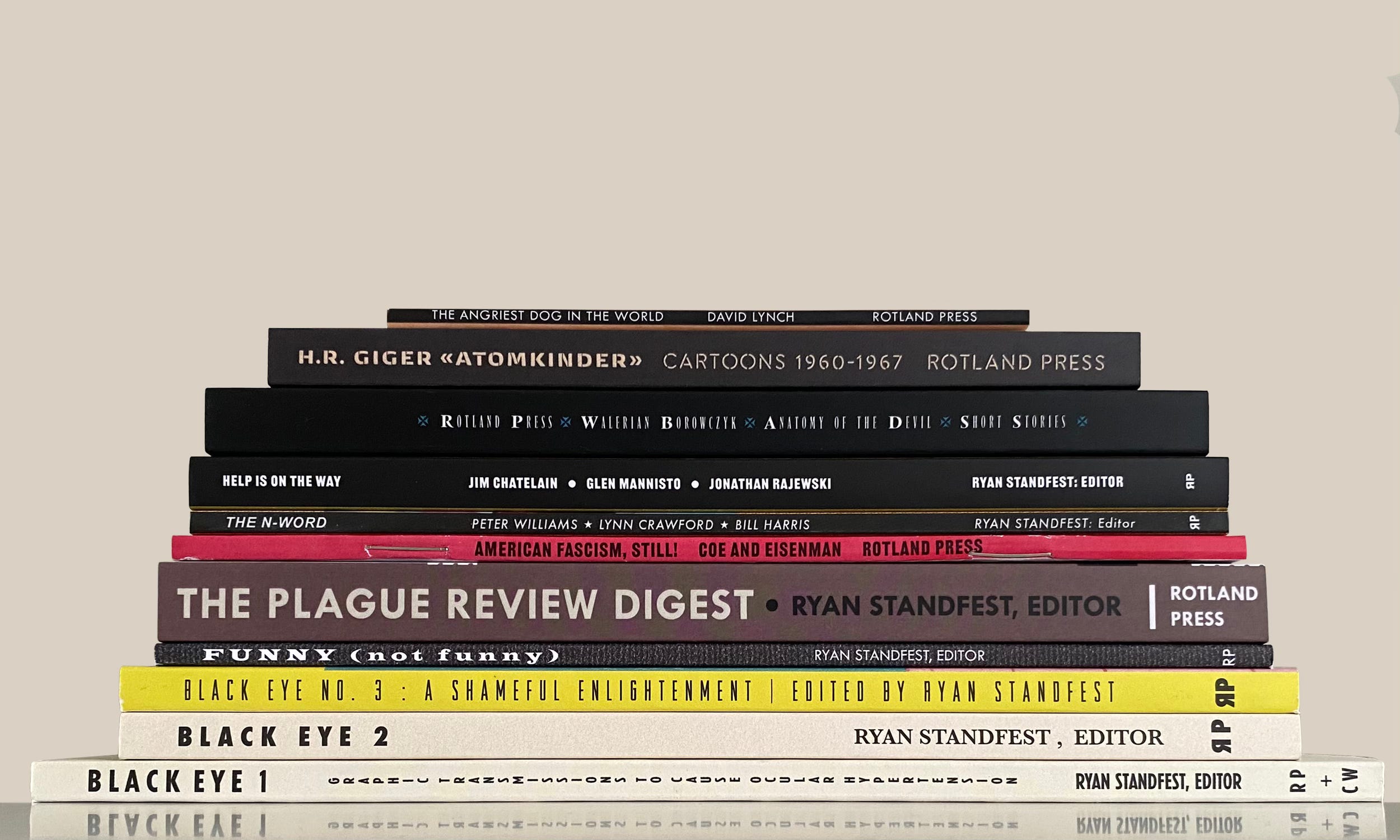
Around that same time, Rotland Press was born from an urgent need to push beyond the studio and out into the world. It began with an exhibition I curated for a now-defunct University of Michigan satellite gallery in Detroit, run by my friend Stephen Schudlich. Titled Funny (not funny), the show examined dark humor in alternative and independent comics. I edited a catalog and published it under the label Rotland Press. It barely sold, but it planted the publishing bug in me.
Curiously, Funny (not funny) initiated more relationships with people in New York than I had been able to broker while living there. During this same period, still seeking alternative forms of engagement with an audience beyond the gallery, I formed Cabaret Black Eye, a raucous, Dada-infused performance troupe. Alongside a group of mostly forgiving friends, I wrote, directed, and acted in a series of performances between 2007 and 2015. These were highly absurd spectacles, laced with destructive acts of comic violence through the use of elaborate props and accompanied by loud live music.
There were moments early on when the boundary between Rotland Press and Cabaret Black Eye blurred, and some of the performances related to the work I was publishing. Since then, I have course-corrected and no longer publish projects that could be considered my “personal artwork.”
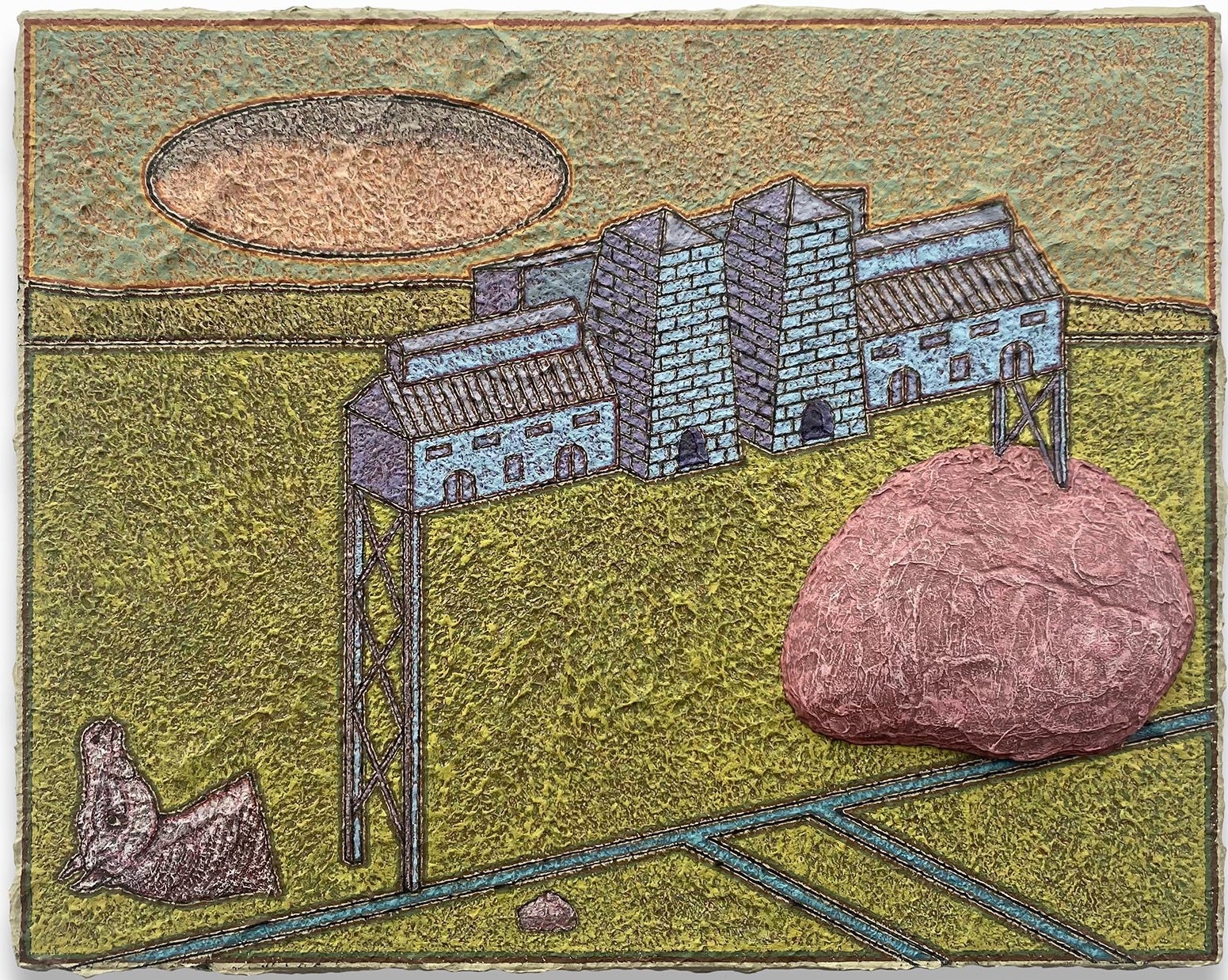
MPM: Let’s talk about your own personal artwork. Your imagery often centers on industrial architecture — factories, warehouses, and the skeletal remains of production — forms that evoke Detroit and the broader postwar American economy. Do these works reflect a sense of critique, nostalgia, or something more complicated about that legacy?
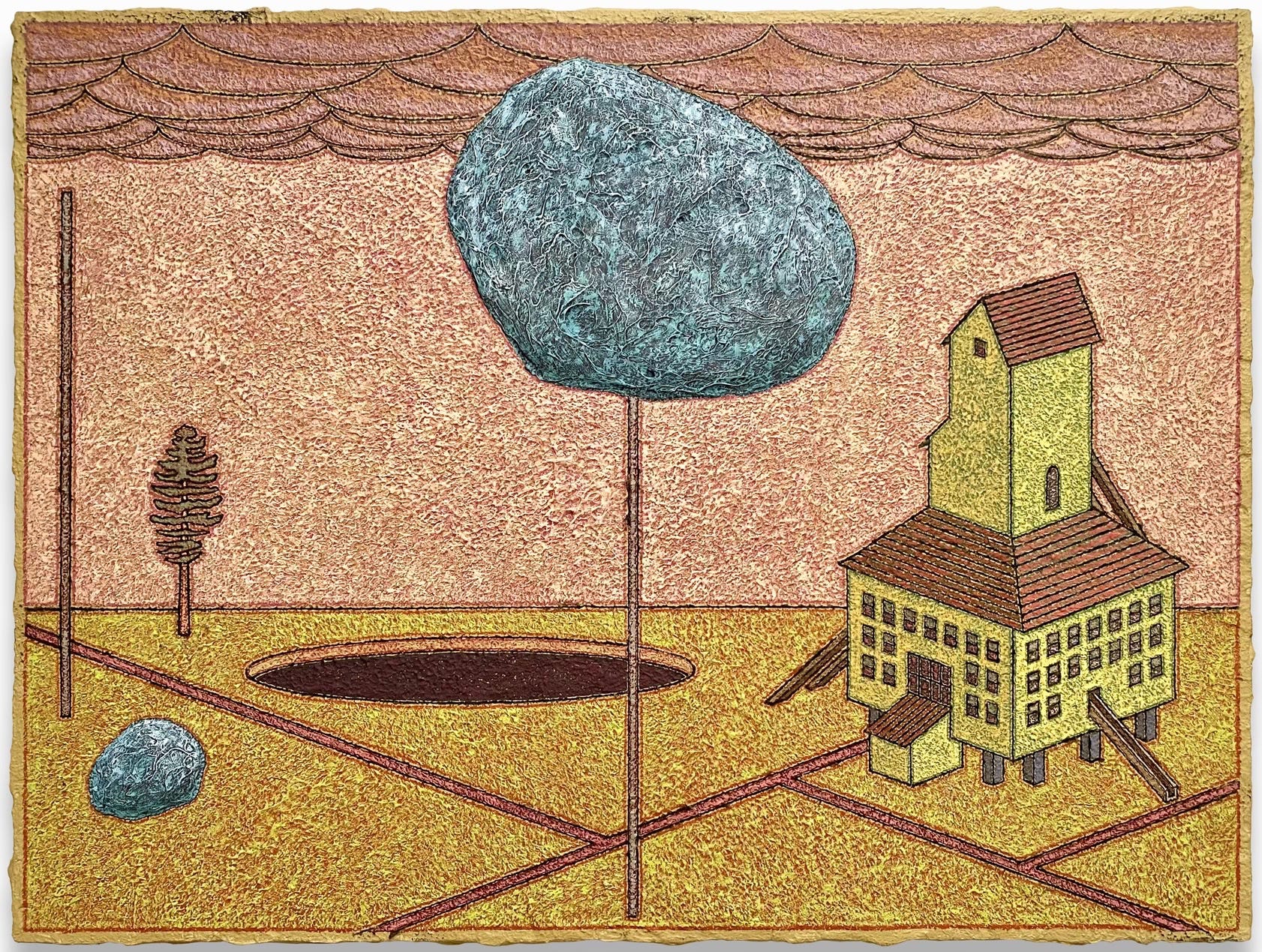
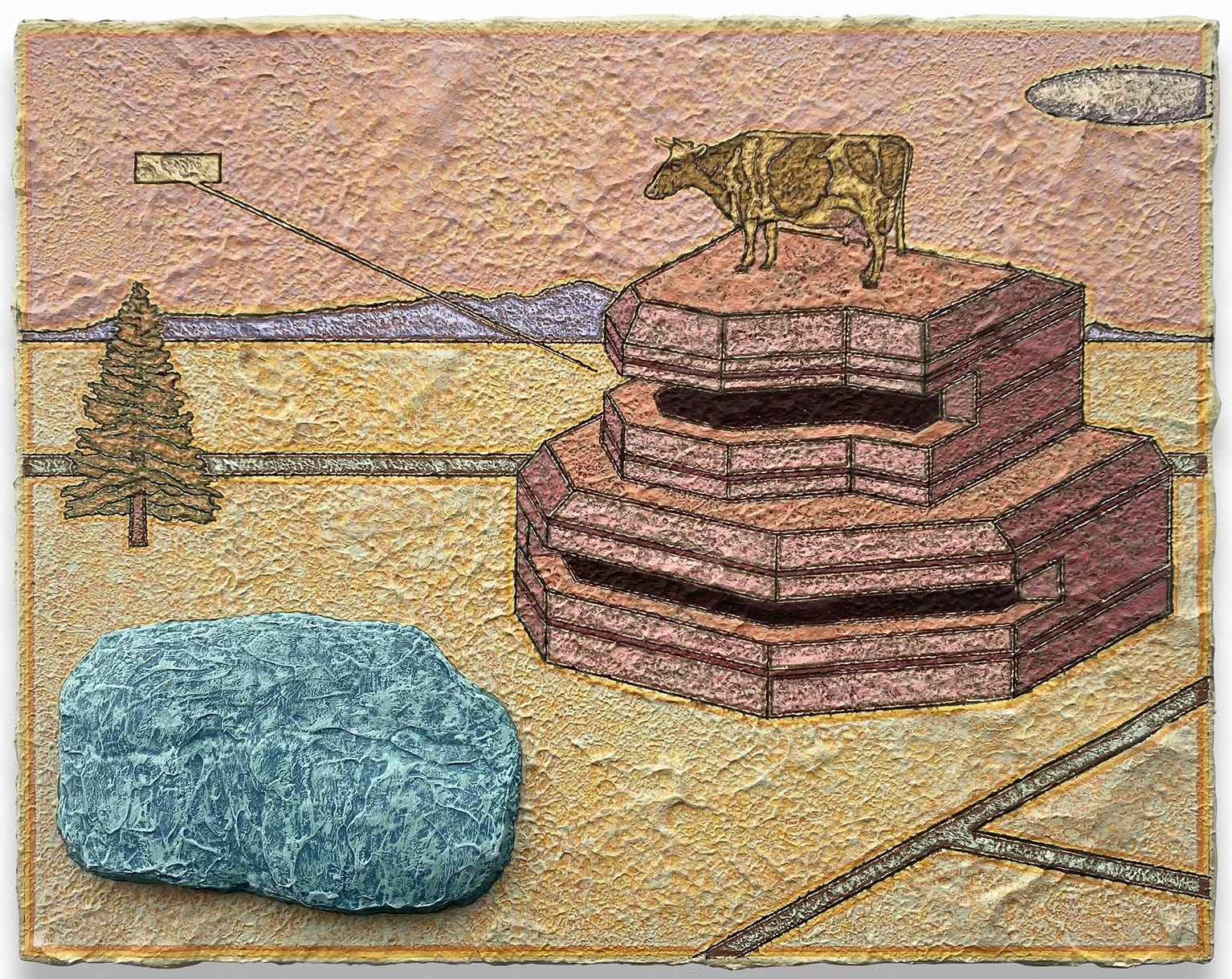
RS: Work I produced six to eight years ago was satirical, ironic, and highly critical — all of it denying and confronting nostalgia — but I’ve since moved away from that approach. What I am attempting to do now is depict an uneasy, troubled state of existence: environments of loss, loneliness, doubt, and oppressive external forces. For me, industrial architecture becomes an essential component of such a landscape. It is what I know.
I don’t like to traffic in symbolism; I believe in showing a thing for what it is. In my work, the factory, the modernist construction, the bunker, the crematorium, the mill, the machine shed, the abattoir, the mine shaft house — they stand for all that we already know them to be. All the baggage they carry is brought to bear upon the viewer.
My philosophical relationship to existence is nothing new. I’m an old existentialist at heart, attempting to manage my relationship to larger forces beyond my control. But I am also a student of that sub-branch of existentialism — absurdism. It’s all a matter of viewing distance: moving far enough away from the subject so that the world is represented as a model (in non-documentarian, non-realist terms) that depicts repetitive, highly absurd patterns. I suppose that is what I am trying to do.
Critique is specific, surgical, and of the moment. Through humor and a kind of formal stiltedness, I attempt to gain a distanced — thinking here of Brecht’s Verfremdungseffekt — and alienated perspective that reveals the contradictory patterns of existence from afar. It is what I wrestle with every day.
The artists I admire most accomplish this. There is a short animated film by the Polish-born émigré Walerian Borowczyk, Les Yeux des Anges (“Games of the Angels,” 1964), that continues to haunt me and find its way into my consciousness. It is an abstract, poetic post–WWII depiction of systematic atrocity and mechanized execution. It charts the human capacity for inhumanity and does so with a frightening impassivity that reflects what a true moral vacuum is.
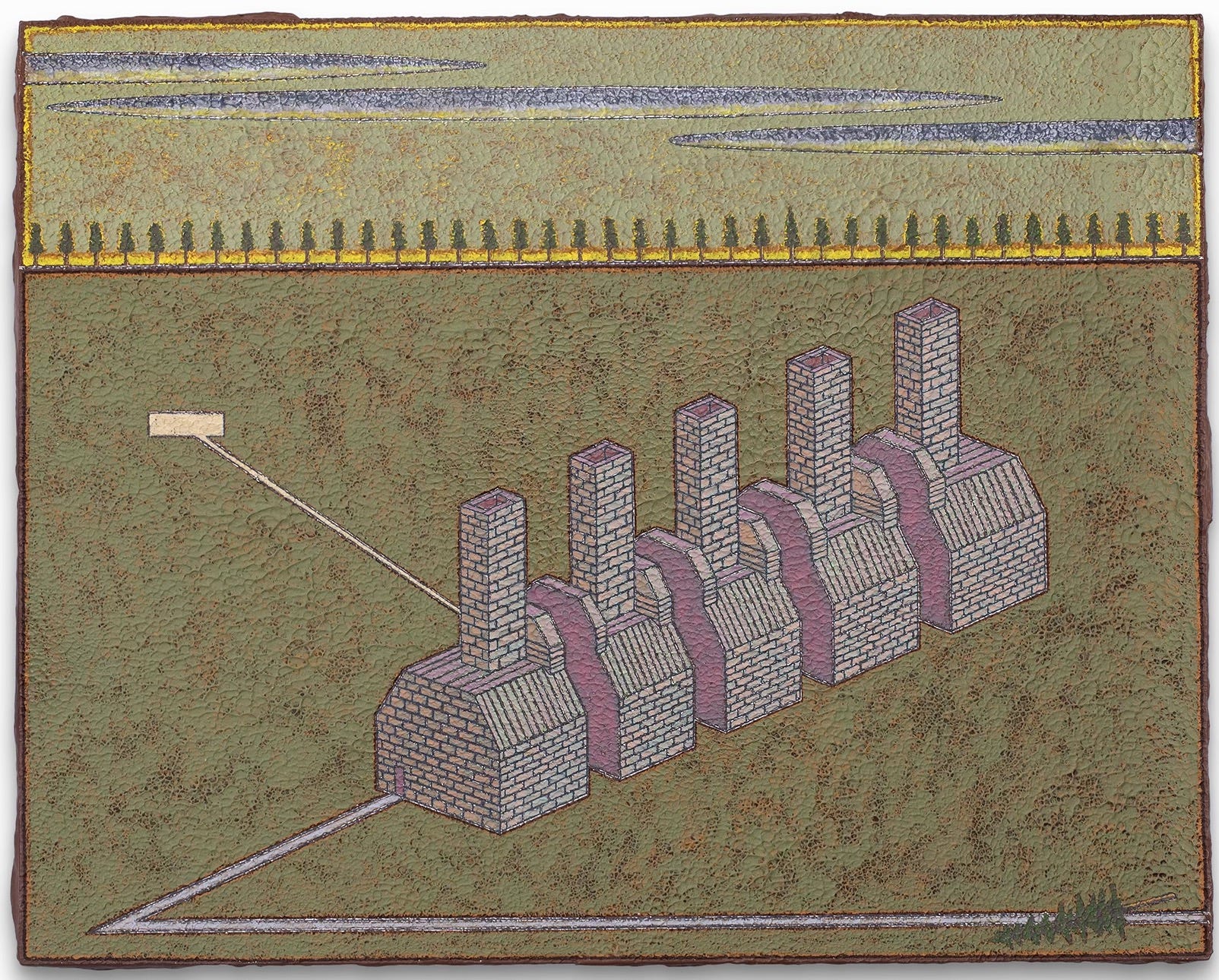
MPM: Your current exhibition, A Catastrophic Insignificance, opened this week. Can you speak about the title and how it relates to this recent body of work?
RS: A Catastrophic Insignificance is on view at the Buckham Gallery in Flint, which is an important geographic location to address, as it is the city where General Motors was founded. The company notably pulled up stakes from the city, ushering in an era of depopulation and urban decay. Then, in 2014, state government incompetence brought about the Flint water crisis, during which the city’s population suffered lead poisoning. Reducing the human to the insignificant is a moral catastrophe.
In the work exhibited at Buckham, as well as in work currently on view at Western Exhibitions and Northeastern Illinois University in Chicago, there is an ever-present nightmare architecture that persists in superseding the human. These are human-made structures and systems — methods of dispatching with our individual selfhood — that I consistently circle back to in my work, responding in personal, oblique terms.
There is a short animated film titled Kuparisaari Dream (Copper Island Dream) that I’ve been tinkering with on and off for the past year. I had hoped to ready it for the exhibition, but it simply isn’t there yet. It grows out of an earlier set of paintings related to the copper-mining region of northern Michigan, where my Finnish immigrant family hailed from. Animation feels like a logical step outward from my paintings, as I often conceive of them as moments bracketed by potential, humorously violent activity.
MPM: With your background in printmaking, does working as an independent publisher — producing multiples and expanding access to art — carry cultural or political significance for you?
RS: The meaning behind why I publish and what I publish has shifted over time. It changes as I change. I’ve been managing Rotland Press for about 16 years now (with a few fallow periods here and there). In the beginning, I fumbled my way into it, producing what I now see as messy, clumsy, almost adolescent projects. The press was born out of a desire to connect with an anarchic, dark-humored worldview — perhaps even a deeply nihilistic one. The work that aligned with that philosophy largely existed in the practices of cartoonists and artists who worked in print, so that was the well I drew from.
Over time, I began to move away from that early, messy model of the press, trying to locate something more meaningful in projects such as a monograph on the work of the late painter Peter Williams and a tabloid addressing the issues surrounding the execution of the staff of Charlie Hebdo.
It wasn’t until 2016, with the first inauguration of Trump, that Rotland Press went into full political tilt, fulfilling some of the democratic objectives inherent in the distribution of printed material. My first collaboration with Sue Coe in particular, American Fascism Now, published in 2020, reached the largest audience I had encountered to date. It was modeled after the Weimar-era anti-fascist publication Die Pleite (“The Bankrupt”), edited by Wieland Herzfelde, illustrated by George Grosz, and designed by John Heartfield.
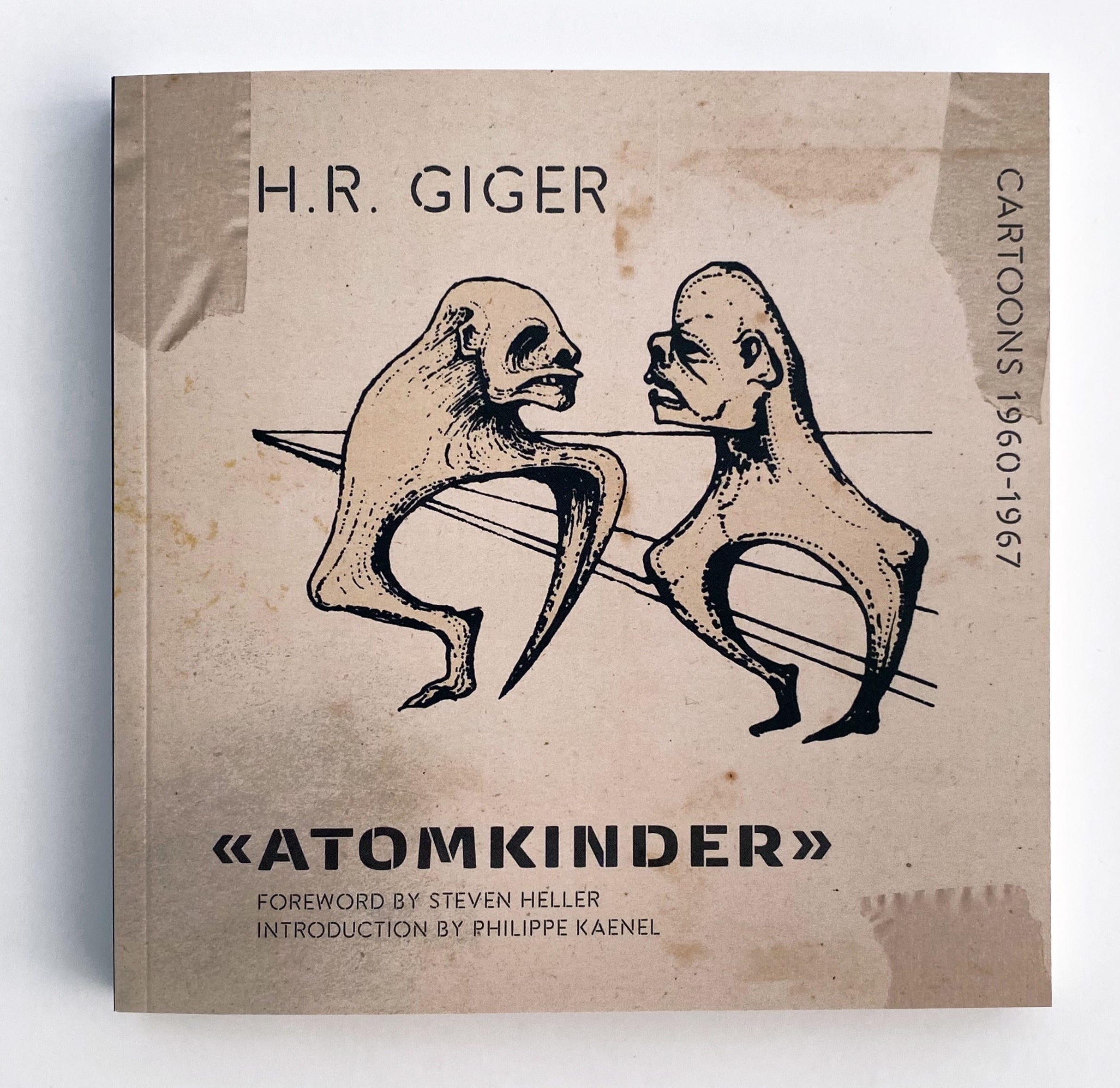
Similarly, I found that publishing during the pandemic allowed me to reach an audience that a gallery platform could never achieve. With everyone in lockdown, the appetite for printed material was unexpectedly high. It was during this period that I assembled a list of dream projects to tackle: a short collection of The Angriest Dog in the World comic strips by David Lynch (a project he approved); Anatomy of the Devil, a collection of short stories by Walerian Borowczyk, with covers designed by Quay Brothers and approved by Borowczyk’s widow, Ligia Branice (who appeared in La Jetee by Chris Marker); and H.R. Giger: Atomkinder, Cartoons 1960–1967, which collected an earlier, “lost” body of the artist’s work.
This has been the thrill of independent publishing: achieving a reach that has eluded me as an artist, while creating projects that remain in the public bloodstream long after their initial release window. It has also functioned as a strategy for circumventing cultural barriers by constructing my own model from the ground up.
MPM: Looking ahead, what’s on the horizon for Rotland Press? Are there upcoming projects or directions you’re particularly excited about?
RS: I have a queue of projects lined up in various states of completion, but at the risk of generating disappointment if they take more time than anticipated to come to fruition, I won’t say what they are. Since Rotland Press is what the kids call a “micro press,” I’m always trying to do a lot with a little, and I’m bound to disappoint when it comes to my release schedule.
I will say that my focus has definitively shifted away from collections and anthologies and toward publishing monographs devoted to single artists. The work I choose still fits within a particular “Rotland worldview,” but each project allows for a deeper dive. Ideally, I would like to produce publications that also have a second life as accompanying exhibitions, since I think it’s important to see what has been reproduced on the page in real life. But accomplishing that is often easier said than done.
Love this interview! So insightful about the flow of history and the social consequences and possibilities for artists.
Very interesting interview. Inspiring work! I love to hear how artists negotiate and see how they push through painful junctures in such a wasteland.