

Catherine Haggarty
"My choices in conflating space and perception in painting come from the fact that I know life is always two things happening at once."
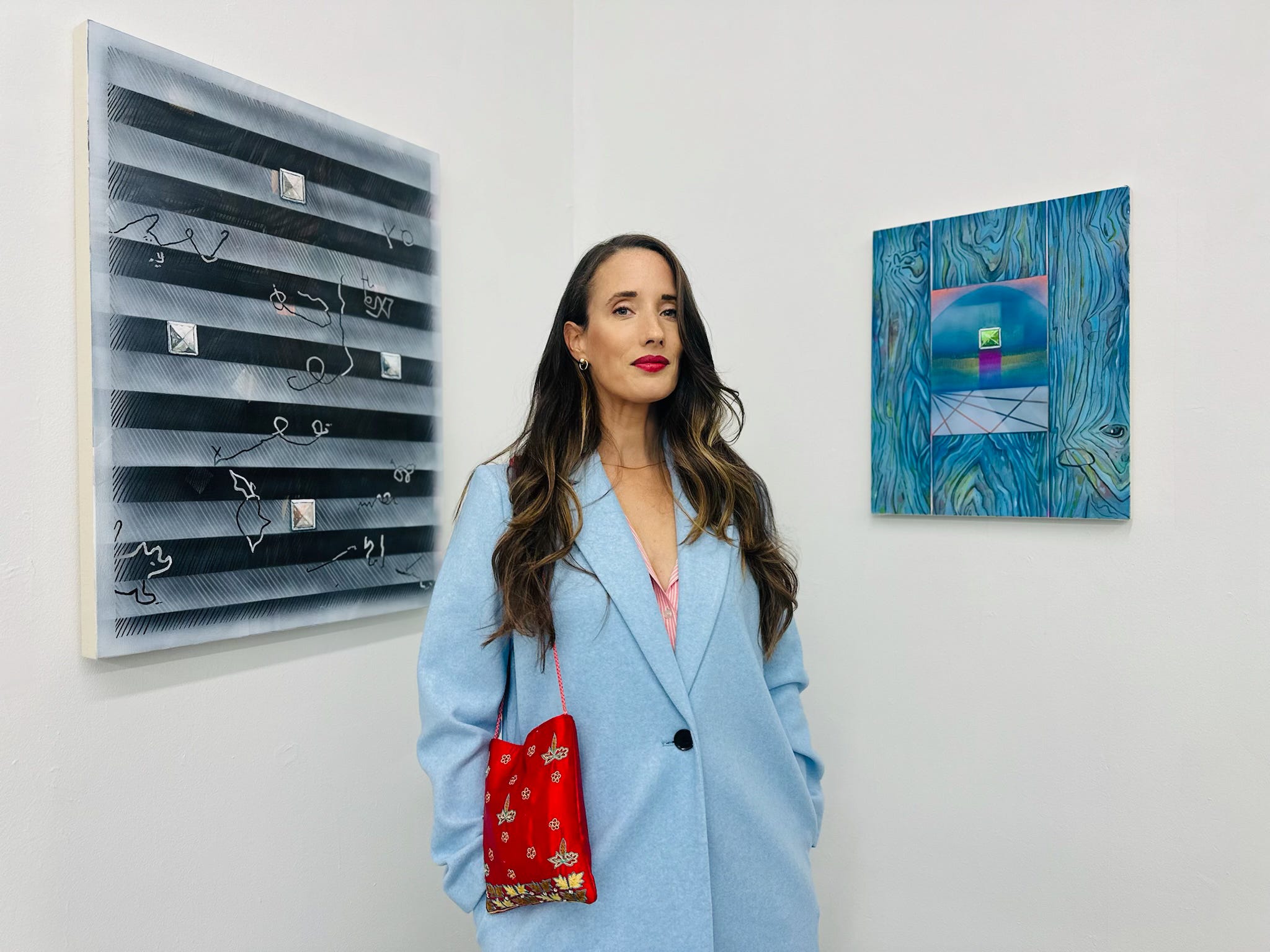
Catherine Haggarty, b. 1984, is an artist based in Brooklyn, New York. Haggarty earned her M.F.A from Mason Gross, Rutgers University in 2011.
Haggarty’s paintings and curatorial work have been reviewed by and featured in Bomb Magazine, Hyperallergic, Artnet, Art Forum, Two Coats of Paint, The Denver Post, Brooklyn Magazine, Maake Magazine, Art Maze Magazine, The Observer, Art Spiel, and Artsy. Select solo & two person exhibitions include: Deanna Evans Gallery (NYC), Untitled Miami (FLA), Lorin Gallery (LA), Geary Contemporary (NYC), Leftfield Gallery (CA) & Massey Klein Gallery (NYC). Select group exhibitions include NBB Gallery (Berlin), Andrew Rafcaz (Chicago), Mindy Solomon (FLA), Hesse Flatow (NYC), Mrs (NYC), The PIT (LA), Projet Pangee (Montreal).
Catherine has been a visiting artist & critic at Cornell MFA (2024), Rocky Mountain College of Art (2024), Western Connecticut MFA (2023), Contemporary Arts Memphis (2023), Vassar College (2023), Rutgers MFA (2022), UAlbany MFA (2022), MICA (2022), UCONN MFA (2022 + 2023), RISD BFA (2022), Pratt BFA (2022), The University of Oregon (2021), Boston University MFA (2021), SUNY Purchase MFA (2020), Hunter MFA (2020), Denison University (2020), Brooklyn College MFA (2019) and in 2018 Haggarty was the Anderson Endowed Lecturer at Penn State University.
Haggarty’s work is in the collections of Fidelity Bank, Tom & Chai Hall, Beth Rudin DeWoody, EF Foundation and Memorial Sloan Kettering. Haggarty is a Visiting Associate Professor at Pratt Institute and the Founder of The Canopy Program.
MEPAINTSME: I’d love to start with a bit of your background. Where are you originally from? Were you exposed to art from a young age? When did you begin seriously considering a career as a professional artist?
CATHERINE HAGGARTY: I am from Morristown, NJ. I never took many art classes as a kid but I saw my Dad do carpentry around the house. The first ‘art’ thing I ever did was to make trash sculptures in the garage. I had no idea what I was doing, just that I didn’t have art materials and the idea of making something out of recyclables seemed fun. I think I finally knew I had to be an artist when in college - I got accepted to Tyler Rome Abroad program and finally really got immersed in art and art students. Before this, I was on the college basketball team and a psychology major with an art minor. After this Rome trip, I knew I had to try to make a life of art. I view art as a calling and a life - not really as a profession in the way of how that word operates in other fields. I recognize though that there are professional aspects of it.
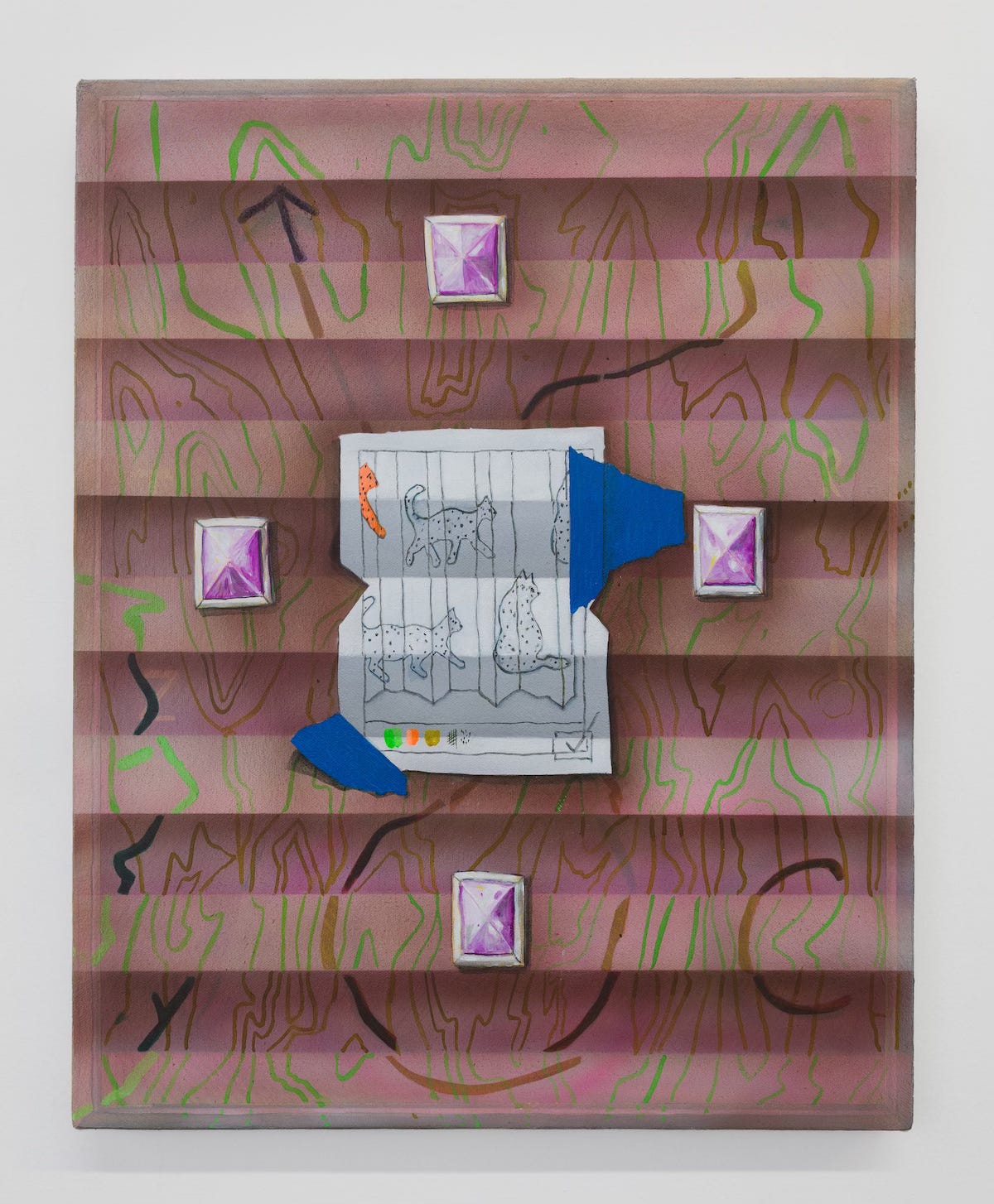
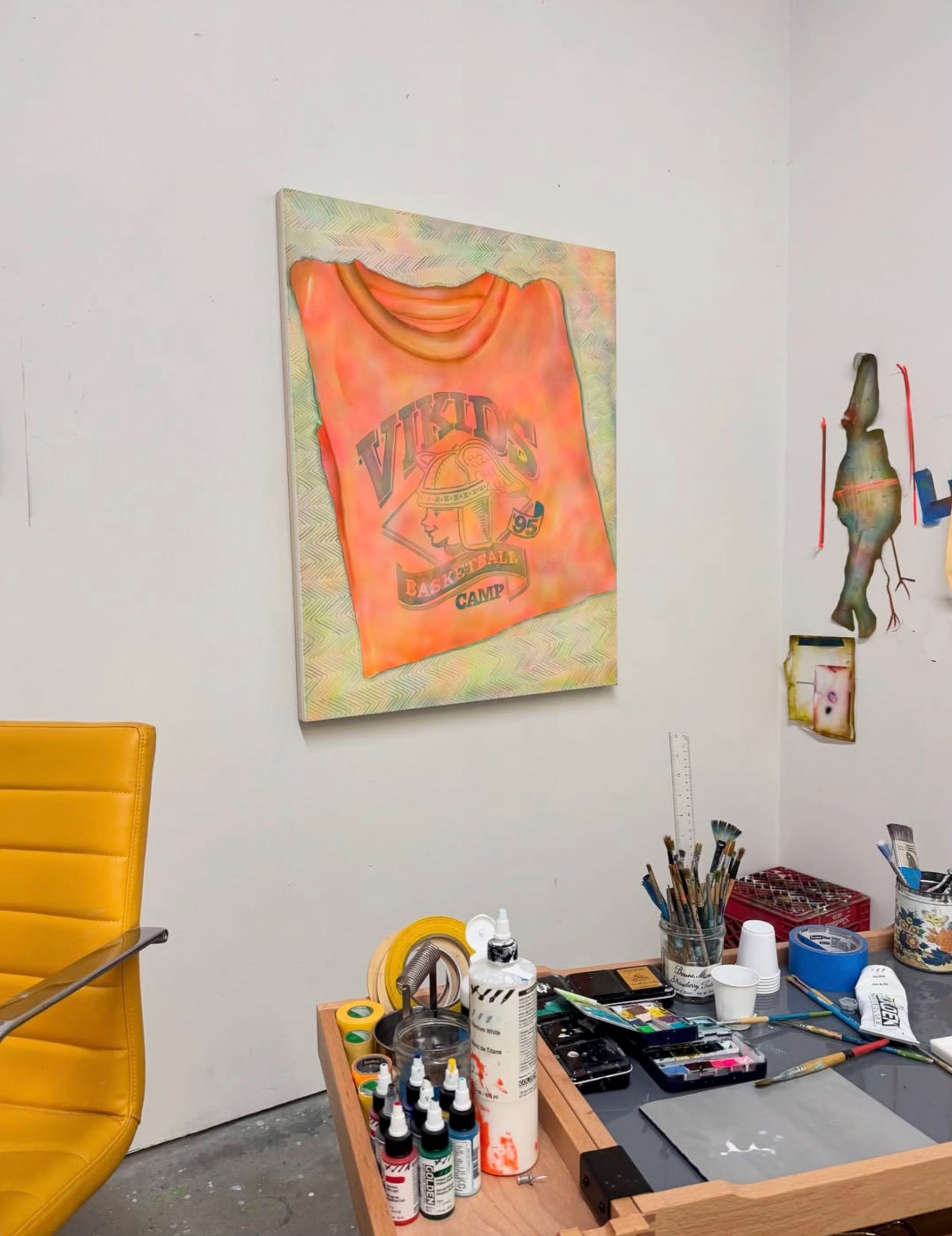
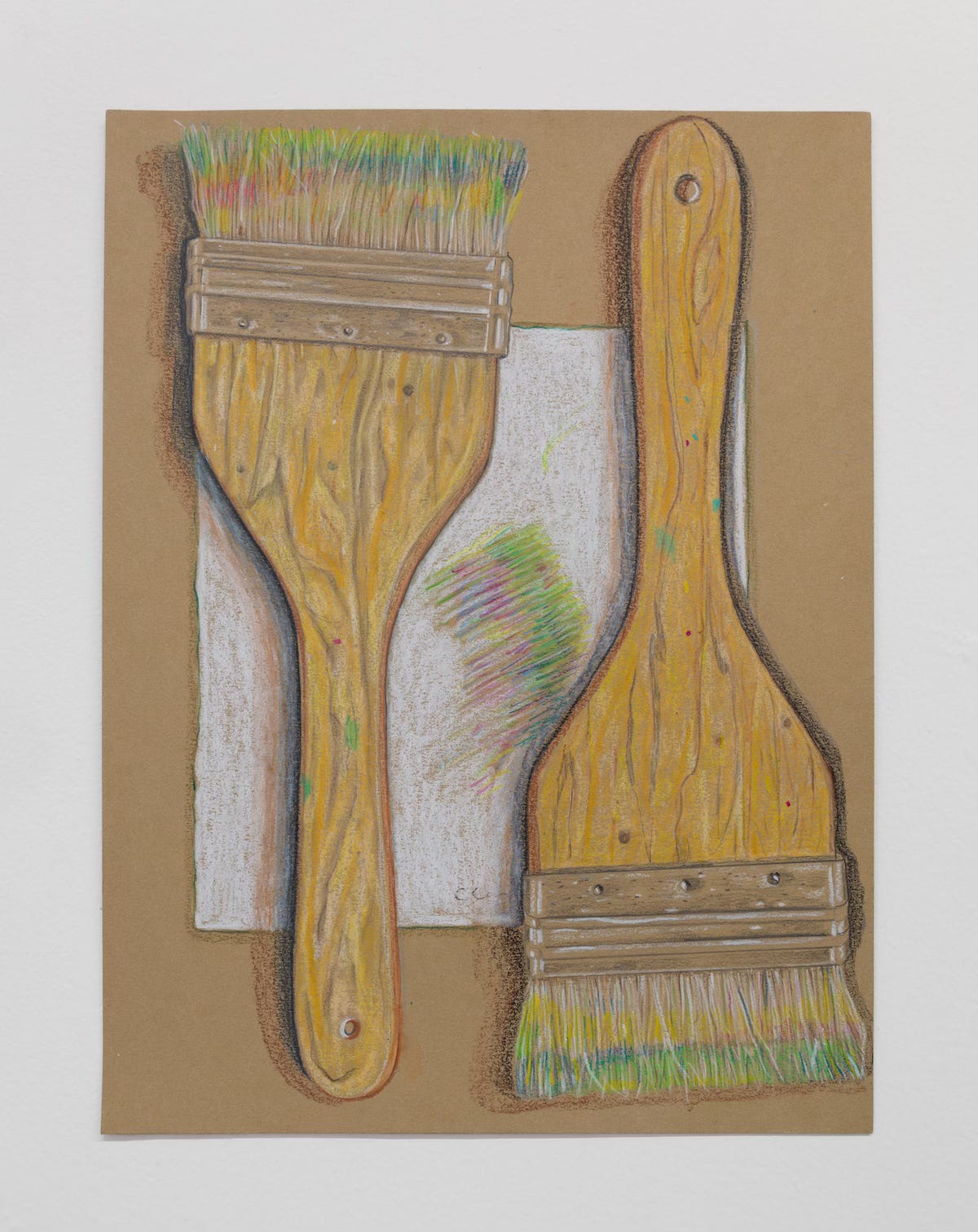
MPM: There’s such a clear visual language in your work, especially with the way you use a recurring vocabulary of domestic spaces and personal possessions like sketchbooks, sneakers, and art materials that really invite the viewer into a private world. Do you see these pieces as ‘portraits’ of yourself? I’m curious if you find that painting your environment actually captures your internal world more authentically than a standard self-portrait?
CH: I don’t think much about portraiture in that sense but it is possible the icons and objects I refer to are a sort of auto-biographical visual vocabulary, yes!
MPM: In your last show at Deanna Evans Projects, you moved into very personal territory by focusing on your late father. When you’re working with something so deeply felt, and perhaps even painful, it feels like that vocabulary almost has to shift. What new types of symbolism emerged in that body of work? Do you feel like you were trying to capture who he was, or were you more interested in exploring the emotional space his absence left behind?
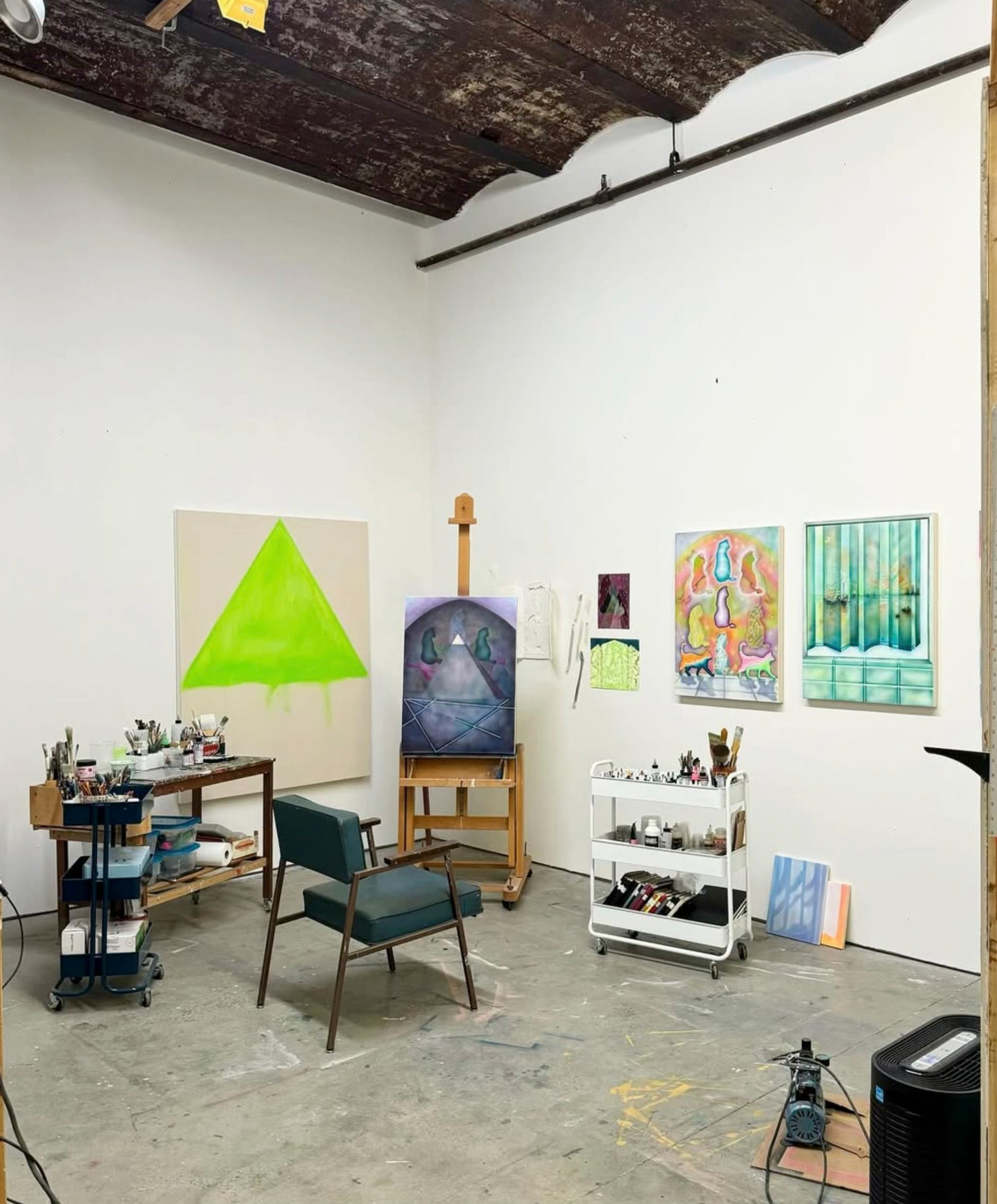
CH: I think that body of work was ten years in the making and earlier that year I had the good fortune and opportunity to have a ten year ‘retrospective’ at The Rocky Mountain College of Art in Denver. For this show, I really had to work with the curator to look back on themes and select work. It helped me see what I always looked for and paid attention to and that although over the years, my language of painting / drawing shifts - my attention is fairly consistent. The show ‘Afterlife’ at Deanna Evans really pulled together some themes I think I needed to push further and I felt a strength of the show was how I really digested the forms - and re-ordered them into something new and specific. I feel, to date, it was my strongest body of work for how true it is to how my hands want to work and how my brain processes information. I feel so grateful to Deanna for that opportunity.
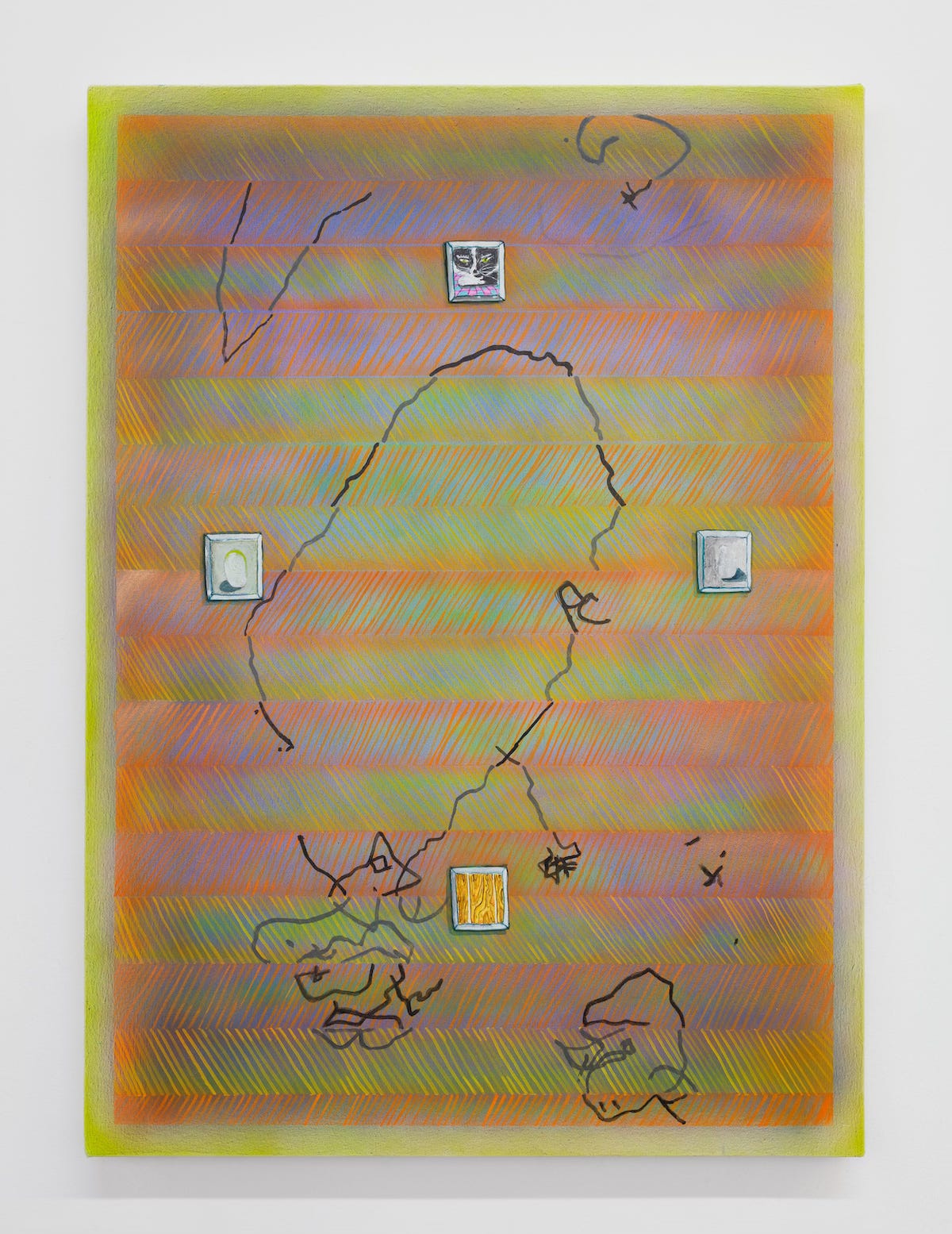
MPM: A significant facet of your work is your playing with illusion. You implement traditional trompe l’oeil devices—such as wood grain, folded paper or drawings taped to walls, shadows cast from unknown sources and pictures within pictures, creating layers of reality, making us question which layer is the “truth” and which is the “image.” What interests you in how we as viewers understand the real vs. the Imagined?
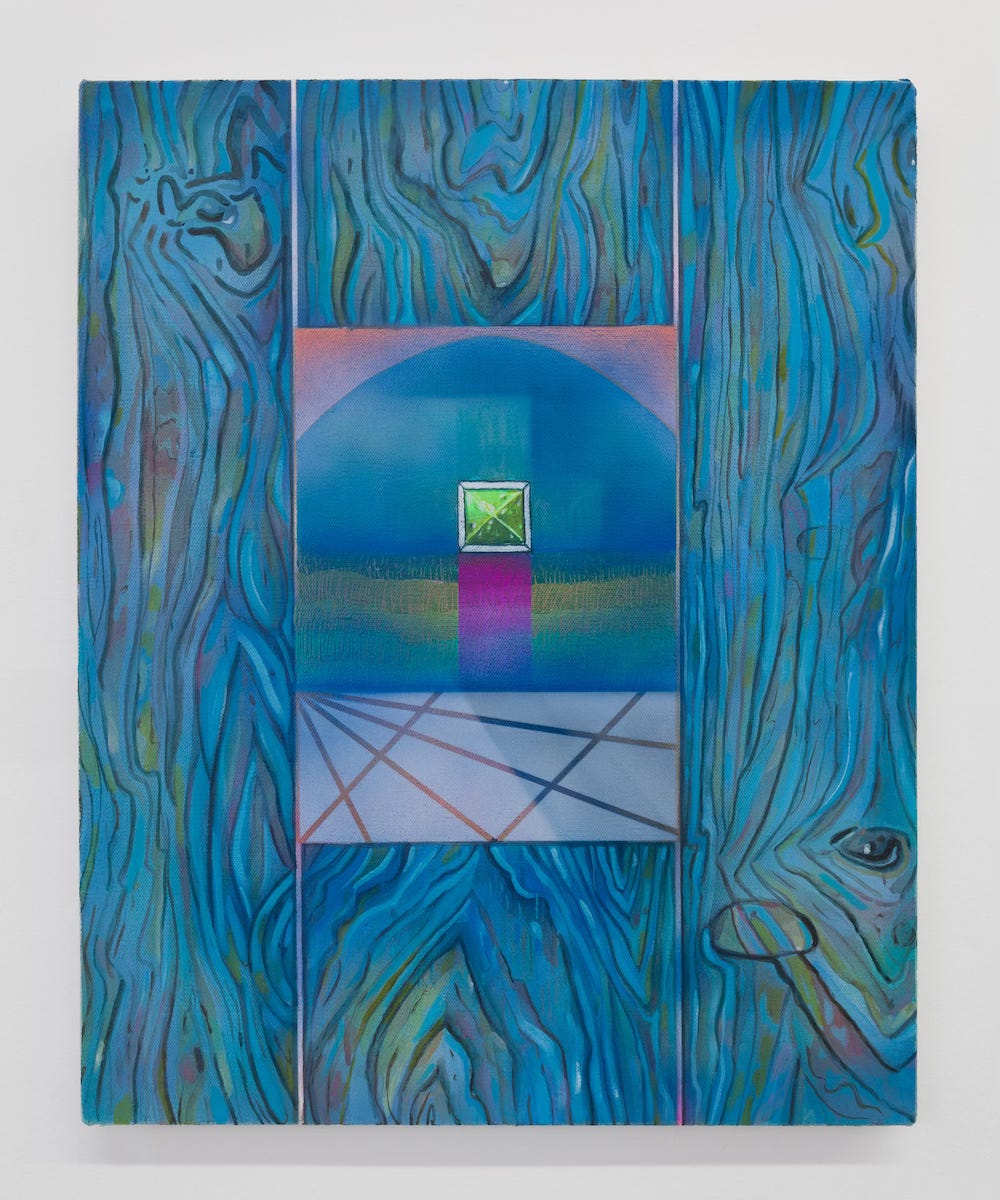
CH: A painting is real in that it is an object in front of you. All ideas of space and illusion are just that - ideas! All art is conceptual - I don’t believe I am fooling anyone but I like to refer to the multiple ways in which our eyes ‘see’ and perceive the world. I love that a reference to an illusion of space may contradict the figure ground’s insistence on leaning forward towards the viewer. My choices in conflating space and perception in painting come from the fact that I know life is always two things happening at once. I think that is the most truthful way to operate. How you paint the world is how you see the world.
MPM: Shifting away from your studio practice, In 2017 you founded the NYC Crit Club with Hilary Doyle and later The Canopy Program to create an alternative, artist-led educational space. Can you talk bit about these programs and why you felt it necessary to provide artists with this type of extended education alternative?
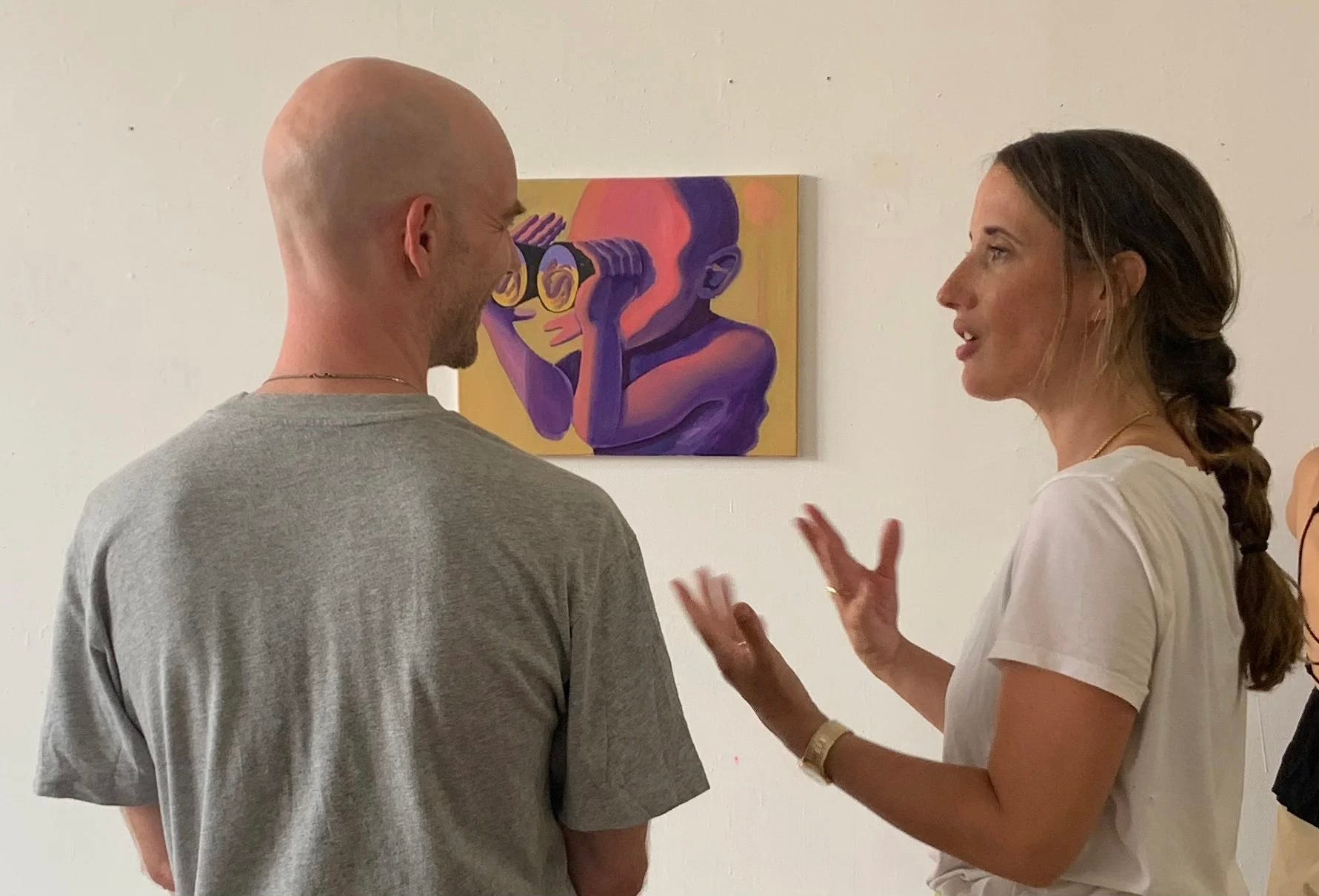
CH: In 2017 we co-founded the NYC Crit Club and ran that together for 5 years! It was an amazing effort and fun and we learned so much. In 2022 I took over the program and in 2023 I founded and built The Canopy Program which is now the majority of the program’s function and impact. It is designed around the idea that for a ten month block of time - artists who are accepted to Canopy get to work with one core mentor and have an additional cast of mentors they get access to through lectures, critiques and workshops. Along with this of course, they form a community with their group and beyond. The whole program experience culminates in a group show at our Chelsea space. I am really proud of the work we do and how much we edit, learn and grow as a program. I suppose years ago we saw a need - and I continue to see the need from the community. The need I see is predicated on an artist’s life needing many components to function well. Learning is constant and our studio & relationships need attention, work and help. We can’t solve it all but I believe in The Canopy Program’s community and studio focused approach.
MPM: Aside from being a professional artist, teacher, and running a large art education program, you’ve recently become a mother as well. Now that your daily life involves the physical and emotional shifts of motherhood, what kinds of new vocabulary of personal symbols—perhaps related to your child or your changing domestic environment—are creeping into your compositions to redefine the ‘self’?”
CH: In any spare time I have - which is very little - I’ve been running and rebuilding my body. That is actually most important to me - I think for the last 20 years I’ve been non-stop making and reacting to life and what is happening. I hope this year, I can just digest my life and get strong again while working and mothering. I will say though, that there is an interest in the geometric forms I see in her toys, in seashells which represent fertility and in land which feels important right now. That is all I can muster and I suppose my job is to digest these forms, research more and push them until they teach me what I need. One day at a time.
MPM: As artists our physical realities affect our work in big ways. I found becoming a parent effected my art not only in terms of subject but in also in how the work was created, the mental space needed to focus on it and how time that was previously allotted to it’s creation was affected. Have you been dealing with these same realities? Has it affected your approach in making a painting?
CH: I’ve always juggled jobs and a busy studio life so I feel equipped in terms of time management but of course being a parent is now another level of compartmentalization. I think the hardest thing for me is to mentally present myself in the studio and focus on what I need - as most of my life is about what others need. That is the new mental aspect I am working on - share tips! Ha!
MPM: What is on the horizon for you? Do you have any shows or projects that you’d like to mention happening in 2026?
CH: No shows - I’d love one but for now…I am mothering, teaching, drawing, painting, running and doing the best I can. Thank you!
Yes!! Love Catherine's work. I took a summer Crit Club 3 years ago and it really transformed my process and connected me more with the artist community in Brooklyn. I'm still friends with several of the other artists I met in the course <3